Roof Sealant: A Necessary Additional Waterproofing Measure?
By Cynthia Pigeon
Updated on July 16, 2024
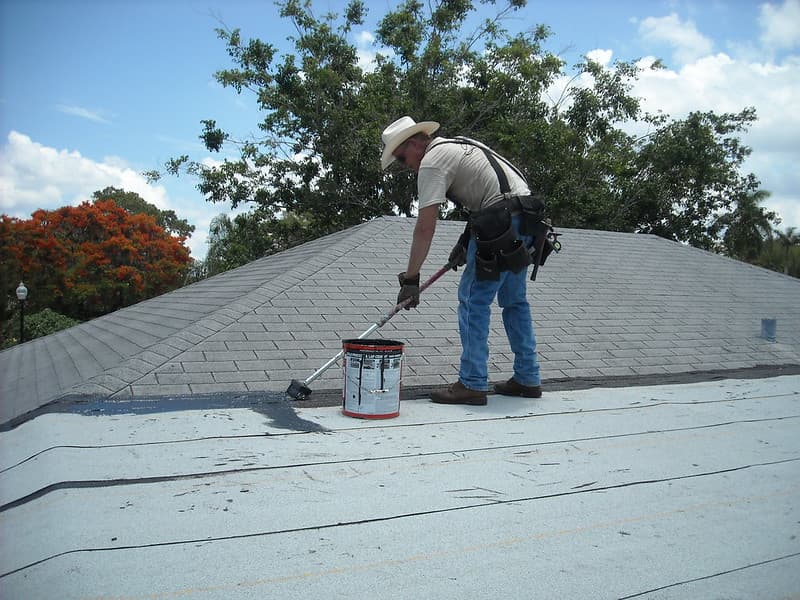
In northern countries, like Canada, where the weather is cold and the land is snow-covered, it’s important to present air and water infiltrations by appropriately shielding rooftops.
Roof sealant is an effective way to waterproof and protect the roof of your home against the elements. Are you looking to apply a roof sealant, but aren’t exactly sure how to go about it? Check out the following to learn more about the different roof sealants on the market, from types to features, and prices.
What’s Roof Sealant?
Roof sealant is designed to protect roofs from adverse weather conditions and insulate all areas that could be susceptible to moisture. There are several types of sealants available for either flat or sloped roofs. These roofing products are widely used on flat roofs to prevent stagnant water from seeping through the roof during winter. To ensure a roof is moisture-resistant and easy to maintain, a sealant is applied directly to the edges and seams of the covering, and to the roof itself.
Aside from preventing leaks, roof sealant reduces damage caused by UV exposure. Without a protective coating, a roof exposed to UV rays can easily bleach or crack.
A protective coating of roof sealant prevents the above-mentioned from happening and keeps the roof from getting too hot. Moreover, white roof sealants help cool down the surroundings and reduce heating costs.
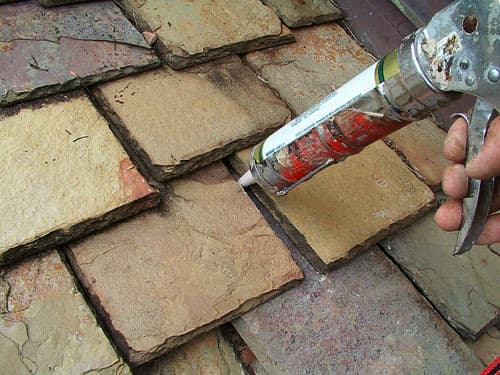
Roof sealants can be applied either during roof installation or repairs. Besides prolonging the roof's durability, they can also be used to:
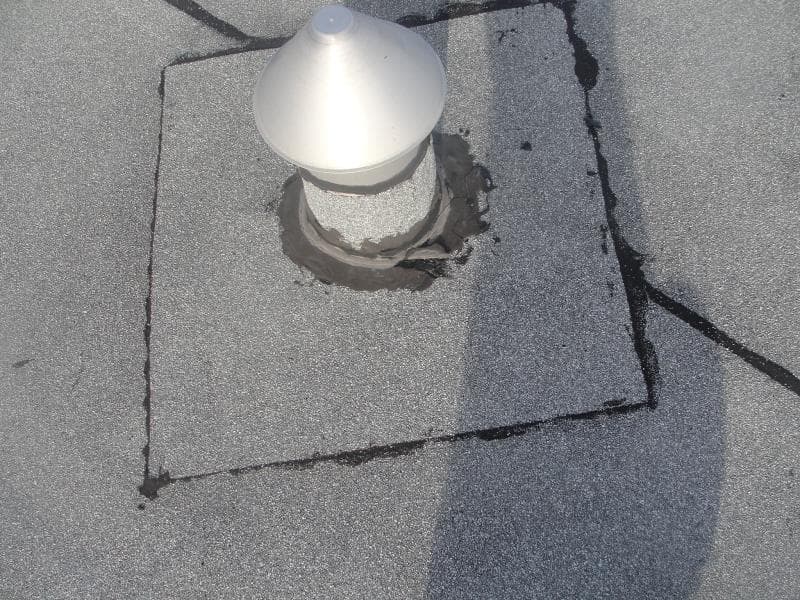
Fix cracks in the chimney, ventilation shaft, antennas, and other elements protruding from the roof;
Fix the edges between the sheeting or other roofing components, especially on low-pitch roofs;
Seal joints between the roof and other materials;
Quickly fix leaks;
Operate inclined glide pads;
Insulate thermal bridges;
Keep the house cool during warmer weather and reduce heating costs;
Increase the roof’s lifespan.
Source: Flickr
Examples of Roof Sealants
Mulco’s Pitch Sealant
Mulco's Pitch sealant is designed to seal small cracks of 12 mm wide or less. It's a multi-purpose solvent-cured bituminous sealant for exterior use. It seals joints that are prone to minor seasonal changes between two adjacent or perpendicular surfaces. The Pitch sealant can also be used to seal shingles, flashings, or small holes in the foundation before applying foundation coating.
Advantages:
Doesn’t require a topcoat;
Stops leaks;
Seals holes found in bitumen roofs;
Resists adverse weather conditions;
Can be applied to vertical, horizontal, and overhanging surfaces without dripping;
Affordable.
Drawbacks:
Not intended for flat roofs;
Can’t be used on damp/humid surfaces;
Doesn’t adhere to the following materials: recycled plastic, polypropylene, Teflon, or any material of the like.
Mulco’s Rapid Patch Sealant
Mulco's Rapid Patch is a solvent-cured bituminous semi-mastic and multi-purpose exterior sealant. It can be used to seal small cracks less than 6 mm wide. It can also be used to repair shingles, flashings, or small gaps in the foundation before applying foundation coating.
Advantages:
Can be applied to dry and damp/humid surfaces;
Doesn’t require a topcoat;
Resists adverse weather conditions;
Stops leaks.
Drawbacks:
Don’t use on surfaces that can be damaged by solvents, like insulating panels;
Can’t be submerged and doesn’t withstand abrasions.
Techniseal’s Sealant
Techniseal’s instant sealant is available in spray form. To apply, just spray the surface! After it's been applied, it’ll leave behind a solid and resistant, yet flexible waterproof film. This roofing product is also effective when it comes to sealing rust and corrosion. It can cover 1.8 m² (20 square feet) of surface and can be painted over.
Advantages:
Doesn’t crack or chip;
Quick and easy application process;
Remains waterproof and flexible;
Can seal gutters, roofing, concrete, PVC, heating vents, etc.;
Seals rust and corrosion.
Drawbacks:
Can only be used in ventilated areas;
Can’t be applied in below 5°C or above 30 °C weather.
RESISTO’s 310 ml Elastomeric Sealant
This product’s a bitumen-based, reflective aluminum-coloured sealant, and its composition allows for UV resistance. This product ensures that vents, flashings, valleys, etc. are waterproof. It also allows caulking doors and windows, as well as sealing joints and edges, gaps, and cracks. It cost around $10.
Advantages:
Can be applied to damp surfaces;
Adheres to various types of materials;
Resistant to temperature changes;
Resistant to corrosion.
Drawback:
Can’t be used on softwood planks or supple PVC.
DAP’s Black Polyurethane Sealant
This polyurethane adhesive sealant is a commercial-grade roof sealant. It's designed specifically to ensure joint durability when sealing cracks and exterior spaces. It has above-average adhesive properties compared to most other roof sealants. Due to its superior flexibility, it can easily resist joint movement up to 50%, if applied in a well-prepped edge. This black, adhesive polyurethane sealant is available in a 300ml format for about $11.
Advantages:
Super sturdy and resistant to the most serious weather changes;
Water-resistant;
Adheres to various materials: brick, concrete, stone, wood, metals, etc.;
Prolongs roof’s durability;
Can be used inside and outside;
100% joint seal;
Doesn’t drip and hardens when in contact with humidity.
Drawbacks:
Weak adhesion to plastic;
Can’t be used in areas of high temperatures;
Has to be applied on dry surfaces (can’t exceed 10% humidity);
Requires a topcoat.
Source: Flickr
Are you looking for experts to tackle your roofing project?
Fill out our form to receive quotes from certified contractors!
How to Choose the Most Suitable Sealant
With the wide variety of roofing products available on the market, one can easily become confused and not know which roof coating is best suited for your house. When faced with this dilemma, your best bet is to ask a contractor or a roofing specialist. They’ll be able to assist you in choosing a quality product that best suits your needs. Moreover, some roofing products are solely sold to contractors who have the capacity to properly use them.
If you still choose to DIY it, we highly recommend that you carefully read the manufacturer’s instructions on the product’s label. That way, you’ll be able to better understand the product’s characteristics to avoid purchasing pointless items and obtaining less-than-desirable results. And, if you apply the product yourself, it’s best to clean your roof beforehand and do so during sunny days, devoid of rainfall.
Note that roof sealants can’t be applied to rooftops requiring extensive renovations. A sealant won’t do much to replace a missing shingle or fix a massive crack, for example.
Get 3 renovation quotes for your roofing project
RenoQuotes.com will put you in contact with 3 reliable contractors for your roofing renovation project. Fill in the form on our homepage (it only takes a few minutes), and you will receive quotes from trusted professionals.
Dial 1-844 828-1588 to speak with one of our customer service representatives.
Looking for something else?
Related articles
The latest industry news, interviews, technologies, and resources.

Editorial Team
•17 Aug 2026
White, powdery deposits on brick, concrete, pavers, or basement foundation walls are often a sign of efflorescence. Although the residue itself is usually more of a cosmetic issue than a structural problem, recurring efflorescence can indicate that moisture is moving through the material.
Cynthia Pigeon
•31 Jul 2026
In 2026, the cost of a major energy-efficient renovation to reach a net-zero standard in Canada typically ranges from $100,000 to $200,000 for an existing single-family home. This large-scale project aims to reduce a home’s energy consumption to the point where it produces as much energy as it uses annually. The investment generally includes high-performance insulation, triple-pane windows, a high-efficiency heat pump, and solar panel installation, often supported by federal and provincial incentives.
Léa Plourde-Archer
•11 Aug 2026
For thousands of years, humans have understood the importance of protecting their homes with a roof. But what do we really know about modern roofing? Which materials should you choose, what roof shapes are best, and how can you plan a renovation project effectively? Whether you are considering a minor roof repair or a complete roof replacement, this guide will help you better understand the key steps involved in a roofing renovation.
Editorial Team
•25 Jul 2025
Stone kitchen countertops are certainly popular, but there are other alternatives to this type of material. If you're looking for the perfect match for your kitchen counter, it's understandable that you feel confused about all the options offered to you.

Cynthia Pigeon
•08 Oct 2025
Are you an absolute fan of mechanics and the outdoors? Are you looking for a job that’ll allow you to challenge yourself on a daily basis?