Hickory hardwood floors: installation and maintenance advice
By Editorial Team
Updated on November 8, 2023

Is a new floor on your to-do list for future renovation projects? A hickory hardwood floor may be the perfect choice for your next project!
Combining undeniable elegance and very good durability, hickory wood is generally a winning choice for a hardwood flooring project.
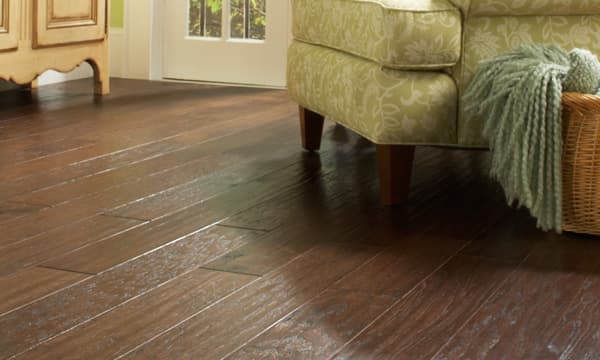
Also known as "ironwood'' for its exceptional durability, the many colours in which it can be offered allow this type of wood to give both as much of a modern look to your home as well as a cozy one. It can also complement your rustic decor very well!
It may be tempting to let yourself be carried away by this choice of flooring, but what about its installation? Where to start? How to maintain it to keep it in good condition as long as possible? We will answer common questions about installing and maintaining hickory hardwood floors in this article.
Installing a hickory hardwood floor

It is important to note that although it is resistant, hickory hardwood flooring should not be affixed to a heated floor, as this may damage it. A successful installation begins first and foremost with good preparation. An installation sketch is recommended before starting. It must include the starting point and the direction in which the slats will be placed, conventionally positioned in the opposite direction to the joists. You will also need to determine the wall (or the starting point) of the installation in order to have a clear idea of the space to be covered.
If your remodelling project has multiple segments, laying the floor should be the last step. To ensure a hassle-free installation, the temperature of the room in which the installation will be carried out should have been kept around 22 degrees Celsius in a heated room for a week.
Wood boxes must also be stored (sealed) in the room where the floor will be installed for a minimum of 24 hours before the work or according to the manufacturer's instructions.
The relative humidity is also a point to watch, as it should be between 30 and 50% when laying the floor - if there is a crawl space under the floor, now is the time to check if it retains moisture and remedy the situation as needed!
Baseboards, borders, quarter-rounds and door sills should be removed as needed. Once these preparations are taken into account, you will need to decide whether you are going for a glued or stapled installation of the floor. The stapled method is more expensive and complex than the glued method, but it offers better sound insulation. Regardless of the preferred installation method, you will need to remove the existing floor.

For glued installation
If you decide to go ahead with a glued-down installation, you need to make sure you select the correct type of adhesive to apply between the subfloor and the floor. It will also be necessary to be able to estimate the approximate time between the installation of the adhesive and the installation of the floor.
If more than two hours elapse between the two steps, the adhesion may be affected as the glue will begin to dry. This step must therefore be carried out within an advantageous timeframe to ensure successful installation of the floor. It would be a shame to invest in a floor and not make the most of it if the installation is not done correctly!
For a stapled installation
If, on the other hand, you decide to go with a stapled (or nailed) installation, the drying issue is obviously not present, but it still requires some checks throughout the installation. You will need at least a drill, finishing nails of varying lengths depending on the thickness of the slats and floor screws.
The base of the nailer must be kept clean and smooth to prevent fine particles from damaging the wooden slats. The tool should also be checked regularly to prevent it from malfunctioning, always with the aim of not damaging the floor.
If your hardwood floor slats are pre-varnished, the precautions to be taken will be more important, because the damage done at this stage means eventually having to re-varnish the slats.
The maintenance of your new floor
Hardwood floors have the advantage of being thick enough to be sanded and refinished a few times as needed, but a few little preventative maintenance tips will help avoid these harsher measures for a very long time.
The use of the vacuum cleaner unlike a broom should be prioritized as much as possible in order to be able to remove substances (sand, glass, salt, etc.) that can scratch the floor. When using a mop, it is recommended not to use too much water, which could affect the humidity in the wooden slats.
Oil-based soaps should never be used on hardwood floors, as they leave a greasy coating that makes the floor more difficult to wash off the next time you clean it.
Putting felts on the legs of furniture in the room is also an effective and inexpensive way to take care of your hardwood floor: also consider providing your office space with a chair pad if your office chair has casters.
With all these installation and maintenance tips, you are now ready to have a superb floor that will add character to your home and that will be resistant for years to come!
Source for photos: Flickr
Would you like to have an estimate of the cost of your floor renovation project? Try our price calculator!
Get 3 renovation quotes for your floor renovation project
RenoQuotes.com can help you get quotes for your flooring renovation project. If you submit your project to us, we’ll put you in contact with top-rated contractors. Fill in the form on the homepage (it only takes a few minutes), and you will get estimates from trusted professionals.
Dial 1-844 828-1588 to speak with one of our customer service representatives.
Looking for something else?
Related articles
The latest industry news, interviews, technologies, and resources.

Cynthia Pigeon
•08 Nov 2023
Replacing all the windows in a home is such an expensive endeavour, so clearly, no one goes about it blindly. Since the financial aspect of choosing new windows cannot be taken lightly, it is best to mull it over before landing on a specific window model.

Karine Dutemple
•05 Dec 2025
A lot of homeowners still opt for the application of oil on their floor, whether it’s in the kitchen, the bedroom or the living room. Given its ability to bring out the grain of the wood and to let is natural charm shine trough, an oiled floor is certainly a must.

Editorial Team
•11 May 2026
One might think that the paint used on residential structures is the same as that used for commercial or industrial buildings. However, commercial buildings have their own set of by-laws, regulations, and maintenance requirements.

Cynthia Pigeon
•08 Nov 2023
Flooring options must adhere to the environment in which they are installed. Since wood typically has a low moisture threshold, wood and moisture are a notoriously bad fit. That being said, there are hardwood flooring options, as well as finishes, that are suitable for even the most humid of areas.
Editorial Team
•11 Sep 2024
Your kitchen drawers hold the essential elements for you to create a delicious meal, and clean up afterwards. As they’re used numerous times throughout the day, sliding in and out of place, it is evident that they may break. However, a broken drawer can be replaced using basic carpentry skills and even the most novice of homeowners can complete this DIY job.