Unpermitted Work and Hidden Defects in Quebec: What Are the Risks When Selling a Home?
By Cynthia Pigeon
Updated on September 3, 2026

Buying or selling a residential property in Quebec—whether it is a suburban bungalow, a century-old home, or a condo in Montréal—is one of the biggest financial transactions most people will make. During a real estate transaction, discovering renovations that were completed without municipal approval can raise serious concerns.
Basement finishing, adding a deck, modifying load-bearing walls, or completely redoing plumbing and electrical systems: many homeowners carry out work without first obtaining the renovation or building permit required by their municipality.
This raises complex legal questions: What remedies does the buyer have if a problem arises after the deed of sale is signed? Could the seller face a hidden-defect claim? How have Quebec courts dealt with these types of real estate disputes?
Do Unpermitted Renovations Constitute a Hidden Defect in Quebec?
Source: Les Renovations Lafarge inc
In a Quebec real estate transaction, work carried out without a permit can raise several legal issues. Depending on the circumstances, the situation may fall under the warranty against violations of public-law restrictions in Article 1725 of the Civil Code of Quebec, or, where a physical defect meets the applicable criteria, under the warranty of quality against hidden defects in Article 1726. The mere fact that work was completed without a permit does not automatically make it a hidden defect.
Article 1726 of the Civil Code of Quebec defines the legal warranty of quality:
“The seller is bound to warrant the buyer that the property and its accessories are, at the time of the sale, free of latent defects which render it unfit for the use for which it was intended or which so diminish its usefulness that the buyer would not have bought it or paid so high a price if he had been aware of them.”
Legal criteria for a hidden defect under Article 1726 of the Civil Code of Quebec:
The defect must be serious: It must make the property unfit for its intended use or substantially reduce its usefulness.
The defect must be hidden: It must not have been apparent to a prudent and diligent buyer.
The defect must have existed prior to the sale.
The defect must have been unknown to the buyer at the time of purchase.
Difference Between a Hidden Defect, an Apparent Defect, and Regulatory Non-Compliance
To properly understand the scope of a dispute, it is important to distinguish between three legal concepts.
Types of issues that may arise in a real estate transaction:
Regulatory non-compliance: The absence of a permit may indicate a violation of applicable municipal bylaws. Even where the work is technically safe, a structure may still fail to comply with zoning, setback requirements, permitted use, or other municipal rules. In Quebec, such a situation may raise issues under the warranty provided for in Article 1725 of the Civil Code of Quebec.
Apparent defect: If unpermitted work was poorly executed in a way that is clearly visible—for example, a visibly sagging ceiling or an exposed cut rafter—the defect may be considered apparent. A buyer may not be able to complain after the sale if the issue could reasonably have been discovered through a careful visual examination.
Hidden defect: This is a serious problem concealed behind walls, finishes, or other building components that affects the safety, durability, or use of the home.
When Can Unpermitted Work Give Rise to a Legal Claim?
The absence of a permit does not in itself constitute a hidden defect. Depending on the circumstances, regulatory non-compliance may give rise to the warranty against public-law restrictions under Article 1725 of the Civil Code of Quebec. Physical deficiencies associated with the work may also constitute hidden defects if the conditions of Article 1726 are met.
Situations that may lead to a claim involving unpermitted work include:
Serious concealed deficiencies: For example, a structure at risk of collapse.
A municipal notice of violation or demolition order.
A municipality’s refusal to regularize the situation because of major non-compliance with zoning or planning rules.
An imminent safety risk to occupants: For example, an electrical fire hazard.
For example, if an owner creates a secondary dwelling unit in the basement without a permit and, after the sale, the municipality requires the unit to be demolished because the property is subject to strict single-family zoning, the buyer may suffer a significant loss of use. In this situation, the regulatory non-compliance and municipal order may, depending on the circumstances, support a claim under Article 1725 of the Civil Code of Quebec.
Similarly, if an unpermitted bathroom renovation conceals widespread wood-frame rot caused by inadequate waterproofing, the buyer may be dealing with a classic hidden defect resulting from defective renovation work.
Seller Responsibilities: Seller’s Declaration and Legal Warranty
Source: E-CO HOME RENOVATIONS
A seller of residential property in Quebec has a duty to act transparently and in good faith. This obligation is governed by civil law and, where a real estate broker is involved, by the rules overseen by the Organisme d'autoréglementation du courtage immobilier du Québec (OACIQ).
The Importance of Completing the Seller’s Declaration Accurately
When a real estate broker is involved in the transaction, the seller's official declarations regarding the immovable property must be completed. This document is an important part of establishing what the buyer knew and whether the seller acted in good faith.
If the seller accurately states that the required permits were not obtained, that information is being disclosed to the buyer. However, a false statement or intentional omission of an important fact known to the seller may, depending on the circumstances and its effect on the buyer’s consent, result in liability and may constitute fraud.
Possible consequences of a false statement in the seller’s declaration include:
Intentional omission or false statement by the seller.
Potential characterization as fraud or misrepresentation.
Possible effect on the application of an exclusion-of-warranty clause, depending on the circumstances.
Possible compensatory damages where the legal requirements for liability are met. Punitive damages may only be awarded where legislation expressly authorizes them.
If a seller deliberately conceals the absence of a permit to reassure a buyer, the seller may face a claim based on fraud or misrepresentation. Where fraud has vitiated the buyer’s consent, the buyer may seek annulment of the contract and damages or, if they prefer to maintain the sale, a reduction of their obligation under Article 1407 of the Civil Code of Quebec.
Working with qualified professionals to reduce the risk of disputes regarding the quality of structural work performed on a property is recommended. You can consult our guide on how to verify a general contractor’s RBQ licence when reviewing past or future renovation work.
Sale Without a Legal Warranty of Quality: What Protection Does It Give the Seller?
More and more property transactions in Quebec are done using wording such as: This sale is made without legal warranty of quality, "at the buyer’s own risk.” This type of clause is common in estate sales, foreclosures, and sales of older properties.
Limits of a sale without legal warranty:
Potential protection for the seller: The buyer accepts the property in its existing condition and waives the warranty provided under Article 1726 of the Civil Code of Quebec.
Important exception: Articles 1732 and 1733 of the Civil Code of Quebec govern the exclusion or limitation of the legal warranty. A sale without warranty must be assessed based on its wording and the circumstances. Article 1733 notably provides for an exception where a buyer purchases at their own risk from a non-professional seller. An exclusion clause also does not allow a seller to avoid liability for their own acts, and fraudulent conduct may give rise to separate remedies relating to defects in consent.
If a seller knows about a major defect or irregularity and deliberately remains silent, the effect of an exclusion-of-warranty clause must be assessed based on its wording, the seller’s status, and the transaction's circumstances. Intentional concealment that may amount to fraud can also give rise to separate remedies based on defects in consent.
Buyer Remedies After Discovering Non-Compliant Work
Source: H Man Reno
When a buyer discovers serious deficiencies related to unpermitted work, specific steps can help document the problem and preserve their rights.
Possible steps after discovering the issue include:
Identifying the issue or defective work
Providing written notice to the seller
Obtaining a technical assessment from an engineer or building expert
Sending a formal demand letter
Starting court proceedings, where necessary
Building Inspections and the Buyer’s Duty of Diligence
A buyer must act prudently and diligently. The Civil Code of Quebec does not typically require a buyer to hire a professional inspector to benefit from the warranty against hidden defects. However, a pre-purchase inspection remains strongly recommended, and a real estate broker should advise the buyer to obtain an inspection that meets the applicable requirements.
A building inspector’s role may include:
Careful visual examination of building components
Identifying signs of recent renovations, for example, a new electrical panel
Recommending that permit records be checked with the municipality
Recording apparent deficiencies in a written inspection report
If an apparent condition or a specific recommendation from the inspector suggests that the buyer should verify whether municipal permits exist, a court may consider the buyer’s failure to do so when assessing whether the buyer acted prudently and diligently.
If major structural repairs or reconstruction are deemed necessary following an unfavourable inspection, review the estimated costs associated with a home addition on a foundation versus a slab-on-grade.
Notice Requirements and Legal Proceedings
Article 1739 of the Civil Code of Quebec requires the buyer to provide notice when a hidden defect is discovered:
“A buyer who ascertains that the property is defective may give notice in writing of the defect to the seller only within a reasonable time after discovering it.”
Rules relating to the notice period include:
Act promptly: Article 1739 of the Civil Code of Quebec requires the defect to be reported to the seller in writing within a reasonable time after it is discovered. The article does not establish a fixed three- or six-month deadline; what is considered reasonable depends on the circumstances. However, the seller cannot rely on late notice if they knew or could not have been unaware of the defect.
Allow the seller to inspect the issue: The buyer should allow the seller to examine the defect and, where appropriate, propose or carry out corrective work before repairs are completed. Urgent work may still be necessary to prevent further damage.
Avoid carrying out repairs immediately: Except in urgent situations, the buyer should generally notify the seller before completing the repairs.
Once a formal demand letter has been sent and no satisfactory response is received, the buyer may begin legal proceedings:
Small Claims Division of the Court of Quebec: For certain claims of $15,000 or less.
Civil Division of the Court of Quebec: Generally for claims from $15,000.01 to $74,999.99.
Claims from $75,000 to $99,999.99: The claimant may choose between the Court of Quebec and the Superior Court.
Claims of $100,000 or more: The Superior Court has jurisdiction, subject to specific rules related to the nature of the proceeding.
Possible legal remedies for the buyer include:
Reduction of the purchase price: Reimbursement for the cost of corrective work
Damages: Compensation for losses such as relocation expenses or other eligible damages
Annulment of the sale: Generally reserved for defects of exceptional seriousness
How Can Unpermitted Work Be Regularized Before or After a Sale?

Source: SLG Renovations
It may be possible to regularize work that was completed without authorization, but the process varies by municipality. The owner should contact the municipal planning or building department to determine whether a permit or certificate application can be submitted after the work has already been completed and what documents or corrective measures may be required.
Depending on the municipality and the type of work involved, the owner may need to provide plans, surveys, photographs, reports, or professional certifications. A municipal inspection and corrective work may also be required. Permit fees and, where an offence has occurred, penalties provided for under municipal bylaws may apply.
Where an existing structure can be brought into compliance with applicable regulations, the municipality may allow the situation to be regularized in accordance with its procedures. However, the issuance of a permit or certificate is not automatic. Corrective work, another form of approval, or, in some cases, restoration of the property to its previous condition may be required.
If the work was completed in clear violation of safety requirements or the Quebec Construction Code—for example, improperly connected plumbing or electrical wiring that creates a fire hazard—corrective work will be required. For more information on technical connections, read our article on plumbing and electrical rough-ins for a kitchen island.
Summary Table: Risks and Solutions by Type of Unpermitted Work
Type of Unpermitted Work | Seller's Risk | Buyer's Risk | Solution / Regularization |
Basement finishing (non-structural) | Risk varies depending on the use created and whether the work complies with applicable requirements. | Risk varies depending on the use, the work performed, and applicable regulations. | Check with the municipality and regularize the work according to applicable requirements. |
Modification of a load-bearing wall or structural framing | Significant risk if structural stability or regulatory compliance has been compromised. | Risk of structural problems, corrective costs, and non-compliance. | Assessment by an engineer and structural reinforcement where required. |
Electrical or plumbing work | Significant risk where the work is non-compliant or was completed without the required qualifications. | Risk of safety issues, damage, and corrective work. | Inspection by an appropriately qualified electrical or plumbing contractor. |
Building addition or extension | Significant regulatory risk if the placement, zoning, or applicable standards prevent regularization. | Risk of regulatory non-compliance, corrective work, or loss of use. | Check with the municipality and regularize the work according to applicable requirements. |
Summary and Practical Advice for the Transaction

Source: RenoQuotes
To reduce risk in a Quebec real estate transaction involving unpermitted work, consider the following best practices.
For the Seller
Disclose all work performed in the seller’s declaration.
Clearly state whether the required municipal permits were obtained.
Keep invoices and records for professionals and materials used.
Do not attempt to conceal defective work through a sale without a legal warranty.
For the Buyer
Carefully review the seller’s declaration completed by the seller.
Have a qualified inspector or professional carry out the inspection, and make sure the hired individual meets the applicable requirements for liability insurance, service agreements, standards of practice, and written reporting.
Check the property’s permit history with the municipal planning or building department.
Provide written notice to the seller promptly if a hidden defect is discovered.
If you discover non-compliant work that requires a complete electrical system upgrade, review the expected budget by consulting the costs associated with replacing an electrical panel.
To bring work into compliance or complete future renovations in accordance with municipal requirements, take the time to request quotes from qualified contractors holding a valid licence from the Régie du bâtiment du Québec.
Looking for something else?
Related articles
The latest industry news, interviews, technologies, and resources.
Editorial Team
•08 Nov 2023
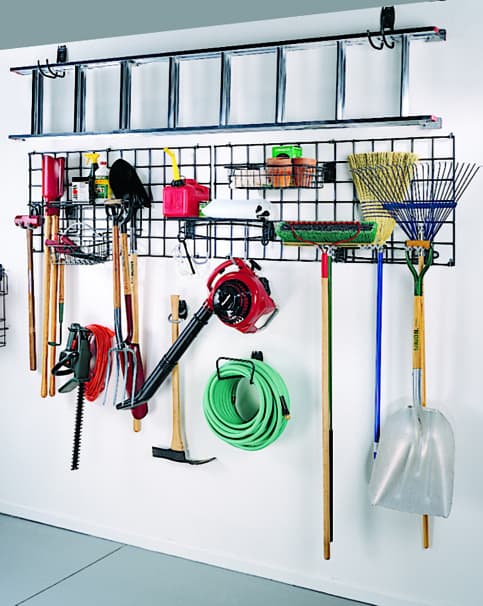
The garage is a multipurpose room that has the potential to serve several functions. With lots of homeowners using this space to hold items that aren't exactly necessary for everyday use, it's important to think about how storage can be created to maximize the potential of this room.

Editorial Team
•08 Nov 2023
During the summer months, decks make for an entirely new living space in your backyard. It's the perfect spot to savour your first cup of coffee in the morning, share meals with your family, gather with friends for drinks, and, in the evening, wind down with a good book in hand.

Editorial Team
•08 Nov 2023
You may be of the mind that renovation is renovation. When considering the end result, this is the case but when it comes to the process itself, there are many different factors that weigh in. If you’re currently living in a condo and wanting to renovate, you’ll face certain limitations, possibilities and strategies for approaching it. In this article, we’re going to look at a condo kitchen renovation and all of what you should consider when renovating this space. This will help you to avoid unwanted surprises during the process.

Cynthia Pigeon
•09 Jul 2026
When it comes time to choose new flooring for a residential property in Quebec, the classic dilemma often comes down to the refined look of hardwood versus the affordable durability of vinyl. Yet in 2026, the shift toward greener renovations and better energy efficiency is leading many eco-conscious homeowners and local interior designers to consider an underrated alternative: cork.

Editorial Team
•08 Nov 2023
Are you finally ready to tackle your landscaping project and the idea of planting a fruit tree beckons? After all, there is nothing better than enjoying fresh fruit harvested right in your backyard!