Building Standards and Codes for a Secondary Suite in Quebec: A Compliance Guide
By Cynthia Pigeon
Updated on June 24, 2026
As housing becomes increasingly scarce and the cost of living continues to rise in Quebec, many homeowners and real estate investors are turning to accessory dwelling units. Whether the goal is to welcome an aging parent, provide a space for a young adult, or generate additional rental income, this type of project can be especially strategic.
However, transforming part of your property or building an addition is not something to improvise. Quebec’s legal framework first requires verification with your municipality, which confirms zoning, required permits, and the construction standards that apply to residential buildings. The work must also comply with the relevant chapters of the Quebec Construction Code and the requirements specific to regulated trades, including electrical, plumbing, and ventilation work. This complete guide outlines the technical and regulatory steps needed to carry out your project without unpleasant surprises.
What Is an Accessory Dwelling Unit (ADU) in Quebec?
Source: Capable group
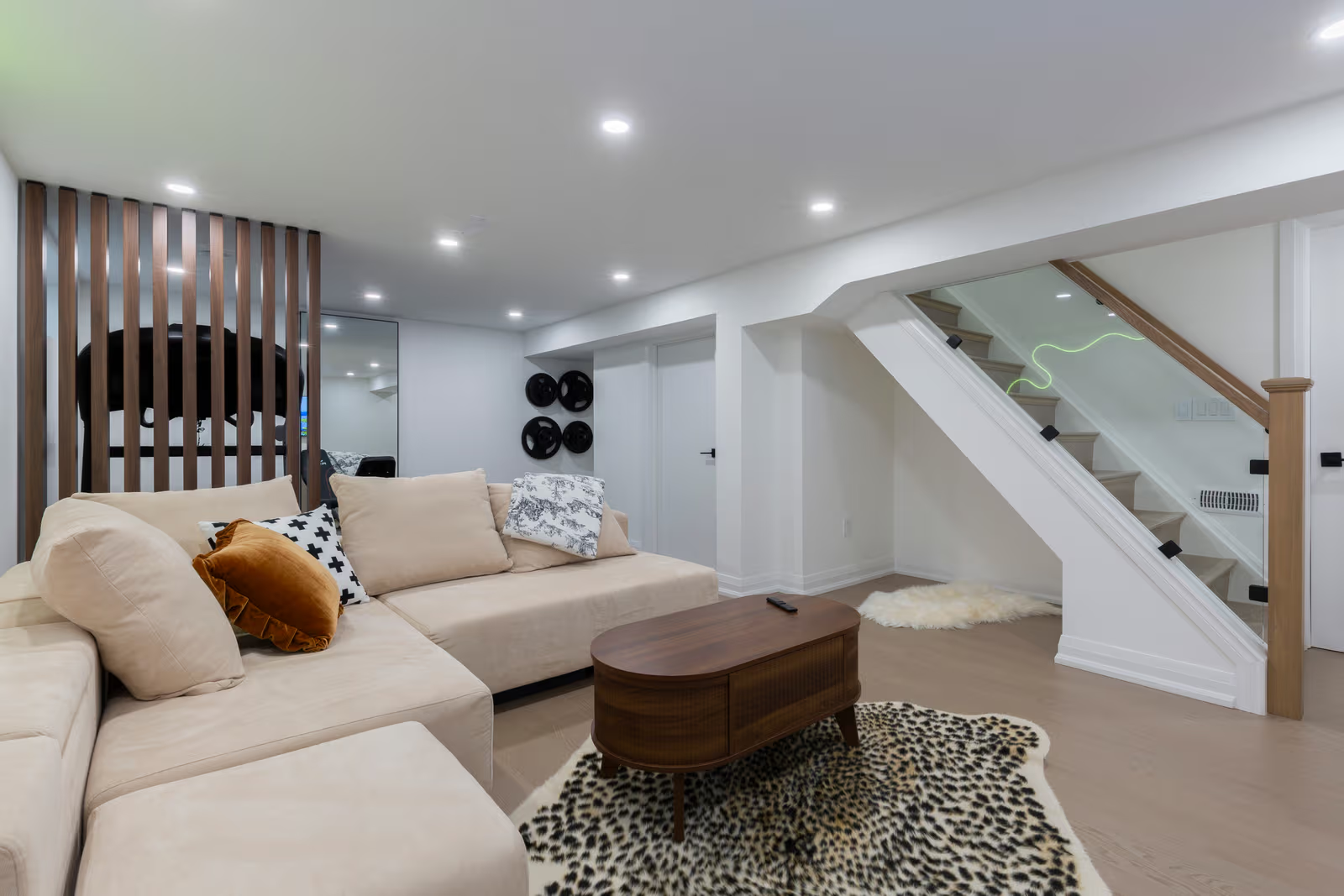
An accessory dwelling unit (ADU), more commonly called an accessory apartment or secondary suite, is legally defined as a self-contained living space that is smaller than the main dwelling and located on the same residential lot.
There are several possible configurations for an ADU:
Interior unit, often in the basement: The most common option in Quebec, which consists of converting an existing section of the house.
Attached addition: A structural addition, such as a side extension or a storey above the garage, physically connected to the main building.
Detached structure: A tiny home or backyard dwelling that is fully independent from the main residence.
To be considered a self-contained dwelling, the secondary suite must generally include its own basic facilities: a functional kitchen, a bathroom, independent living spaces, and a separate or clearly defined access, depending on municipal requirements. In Quebec, the term intergenerational dwelling is often used when the space is reserved exclusively for members of the same family, a distinction that often benefits from more flexible municipal rules than a traditional rental unit.
Key Requirements of the Quebec Construction Code
Source: Normandeau Construction Inc.
Creating a new dwelling unit generally triggers a municipal permit application and a compliance review based on the standards that apply to your building. The municipality confirms the requirements to meet, particularly regarding fire safety, ventilation, plumbing, electrical work, structure, and habitability.
To ensure your installations are compliant, it is recommended that you hire qualified contractors who hold the appropriate licences, especially for complex work or work entrusted to a third party. Some work is regulated differently when it is carried out by an owner-occupant in their own single-family home. Electrical work, gas work, and petroleum equipment work remain more strictly regulated fields and must be entrusted to authorized professionals.
Fire Safety, Fire Resistance, and Emergency Exits
Fire protection is a central aspect of the safety requirements that apply when building an accessory dwelling unit. The Code includes separation requirements between the main dwelling and the accessory dwelling, but these vary depending on the building configuration and applicable standards. Depending on the case, compliance may involve a fire separation, a continuous smoke-tight barrier, a minimum acoustic performance, or a combination of these requirements.
Fire resistance: Ceilings, walls, and floors separating the main dwelling from the accessory dwelling must meet the fire-resistance, smoke-tightness, and sound-insulation requirements that apply to the building’s configuration. Some municipalities require the fire-resistance rating and sound transmission class to be specified on the plans. Assemblies may include Type X drywall, resilient channels, and sound-absorbing materials, but the exact composition must be validated for the specific project.
Soundproofing: In addition to blocking fire, this separation must reduce impact and airborne noise. The assembly separating the two dwellings must achieve the required sound-insulation rating. Resilient channels and sound-absorbing materials such as mineral wool are common solutions, but compliance depends on the acoustic performance of the entire assembly, not on one material being required in every case.
Emergency exits, or egress windows: If the secondary suite is located in the basement, each bedroom must have at least one compliant emergency escape window, commonly called an egress window. This window must open easily from the inside without tools or a key and provide a minimum clear opening of approximately 0.35 m² (3.8 sq. ft.), with no dimension, height or width, less than 380 mm (15 in.). If the window opens onto a window well, enough clear space must be provided in front of the window to allow an adult to exit quickly.
Ventilation, Plumbing, and Electrical Work: Technical Rules to Verify
The mechanical systems of a secondary suite cannot simply be connected carelessly to the existing systems of the main house. Technical compliance requirements impose strict rules:
Electrical compliance: Although it may sometimes be possible to keep a single electricity meter for the entire building, while adapting the capacity of the main panel, the electrical load calculation must be validated. Any circuits added for the suite’s kitchen and heating must be installed by a master electrician who is a member of the Corporation des maîtres électriciens du Québec (CMEQ), in strict compliance with the requirements of the Régie du bâtiment du Québec.
Plumbing: Building a new kitchen and bathroom requires compliant connections to the home’s drains and vents. If plumbing work is entrusted to a third party, it must be carried out by a contractor who is a member of the CMMTQ and holds the appropriate licence. In certain limited cases, an owner-occupant may carry out some work themselves in their single-family home, but the applicable codes, required declarations, and restrictions must be followed.
Mechanical ventilation: The ventilation of an accessory dwelling unit must comply with the applicable requirements, as with any dwelling. An air exchanger or mechanical ventilation system can provide fresh air intake and exhaust stale air. A heat pump can help with heating, cooling, and some dehumidification, but it does not replace a ventilation system designed to renew indoor air. Ducts serving the heating and air conditioning of an accessory dwelling unit must not be directly connected to the ducts in the rest of the house, where this requirement applies.
Ceiling Clearance and Minimum Dimensions
Ceiling height is a major habitability criterion under the Construction Code. For a basement or living space to be converted into a dwelling, the clear height must meet the applicable minimums based on the type of room, the building configuration, and municipal requirements. Several habitable rooms may require a height of around 2.1 m (6 ft. 11 in.), but some spaces may be subject to different thresholds. The height must therefore be validated as part of the permit application.
Some local obstructions, such as structural beams or drywall-covered ventilation ducts, may sometimes be tolerated at slightly lower heights, but they must never compromise occupant safety or clear circulation in corridors and access stairways.
Insulation and Energy Efficiency, Section 11 of the Code
Quebec’s climate, characterized by harsh winters and significant freeze-thaw cycles, requires special attention to the building envelope. Section 11 of the Quebec Construction Code strictly regulates energy efficiency in dwellings.
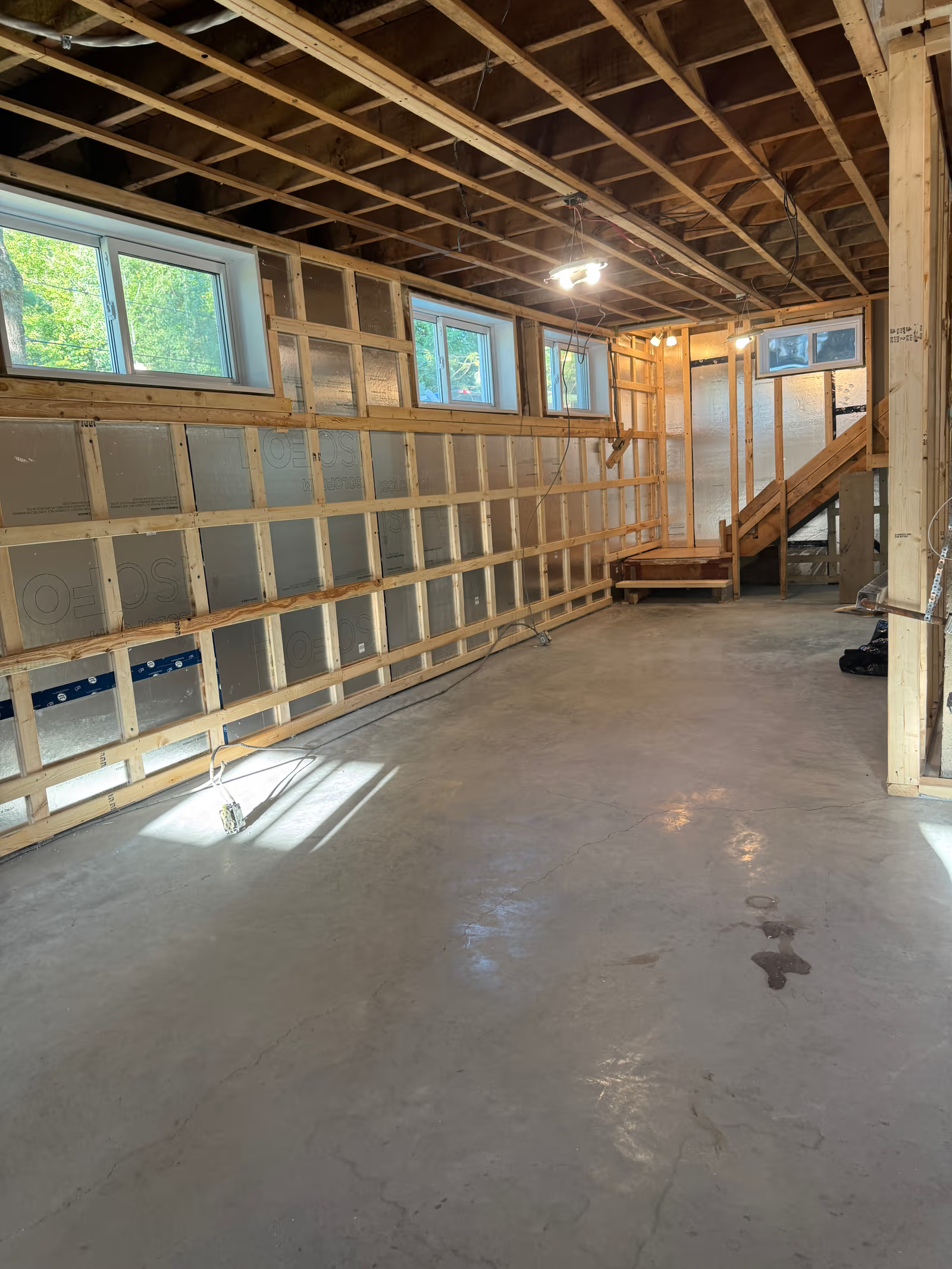
When planning a basement project, insulation for foundation walls in contact with the ground must reach a high thermal resistance value, with the minimum R-value defined according to the climate zone. Moisture management must be carefully designed: drainage, moisture protection, air sealing, insulation, and membranes must be adapted to the existing foundation. A vapour barrier or membrane installed in the wrong place can trap moisture, while properly designed assemblies help limit condensation and the risk of mould. In addition, to reduce the feeling of a cold floor in winter, adding an insulated subfloor or insulating the concrete slab from below can be an excellent comfort investment.
Crucial Zoning Step: Municipal Regulations in Quebec
Source: VITERIE ADSTOCK
Every homeowner must understand one key distinction: the municipality plays a central role in approving the project, since it verifies zoning, required permits, and the construction standards that apply to residential buildings. Relevant provincial requirements and rules specific to regulated trades must also be followed. In other words, even if your plans fully comply with the provincial Construction Code, your project will be blocked if the city prohibits secondary suites in your area.
The municipal zoning bylaw determines whether your property is located in a zone that allows two-family dwellings, such as duplexes, or ADUs. Each municipality applies its own criteria:
Parking: Several cities require an additional parking space on your property for the new tenant, without encroaching on the front setback or green spaces.
Exterior appearance: To preserve the visual uniformity of single-family neighbourhoods, some municipalities prohibit the installation of a second front door visible from the street, instead requiring side or rear access.
Acquired rights: A unit built without a permit by a previous owner does not automatically benefit from acquired rights. If the city’s building inspector finds that the dwelling was never declared or approved, you could be required to remove it or carry out costly upgrades to bring it up to standard.
Before starting any material shopping process or signing a contract, a visit to your municipality’s urban planning department is essential to obtain a clear copy of the local requirements.
How to Get a Building Permit for a Secondary Suite
Source: Théta Groupe conseils
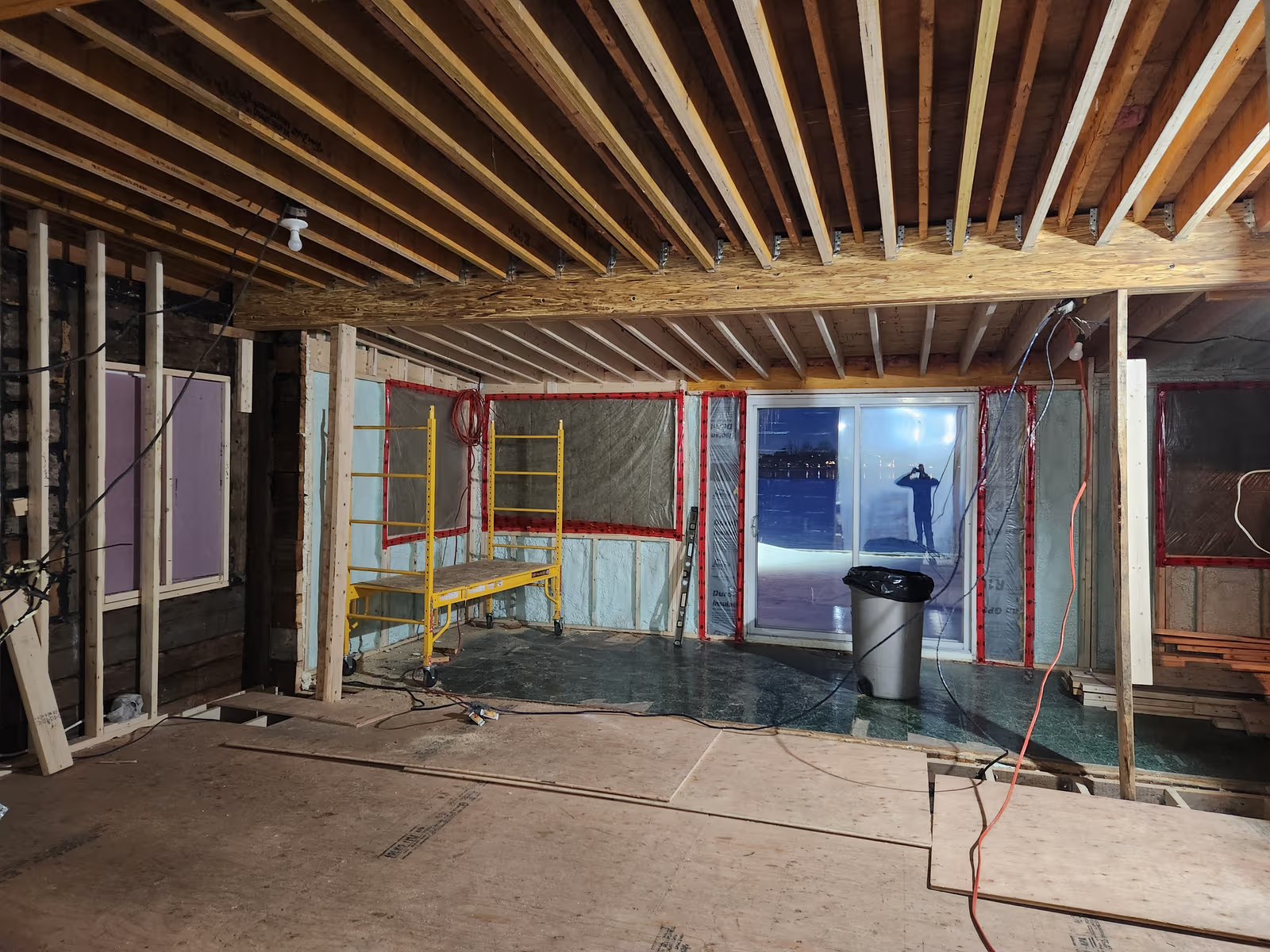
Creating an accessory dwelling unit requires a modification or building permit issued by your municipality. Starting renovations without this important document exposes you to an immediate stop-work order from a municipal inspector, as well as significant fines.
To structure your process efficiently, here are the typical steps to follow:
Step | Required Action | People Involved |
1. Feasibility analysis | sVerify zoning and service constraints, such as water and sewer | Municipal urban planning department |
2. Plan design | Prepare a detailed architectural plan showing exits, fire separations, and plumbing | Technologist or architect. |
3. Permit application | Submit the complete file to the city with an up-to-date certificate of location | Homeowner |
4. Team selection | Collect and compare quotes from qualified contractors | Homeowner and RBQ-licensed contractors |
5. Execution and inspection | Complete the work and undergo compliance visits from the building inspector | General contractor and city |
Plan this process several months before your desired start date. Review timelines at municipal urban planning departments can range from a few weeks to several months, depending on the time of year and the workload of municipal offices.
Practical Tips for Budgeting and Making Your Investment Profitable
Building a secondary suite is a major financial investment. Whether you are carrying out a home addition project or completely renovating a basement, fixed costs related to legal compliance, such as excavation for window wells, under-slab plumbing, fire-resistant drywall, and electrical work, can add up quickly.
To avoid budget overruns along the way:
Never cut corners on safety: An inadequate ventilation system or poor insulation can lead to condensation, mould, and discomfort, which may drive away tenants or undermine your family’s quality of life.
Request several estimates: Take the time to have your plans reviewed by industry professionals. Compare basement renovation costs from different qualified companies that hold the appropriate licences to get a fair market price.
Anticipate the tax impact: Adding a secondary suite may change the assessed value of your property, leading to a reassessment of your municipal and school taxes. Rental income received must also be reported to Revenu Québec and the Canada Revenue Agency. Some current expenses related to the rented portion may be deductible, but work that adds a lasting improvement or transforms the property is generally treated as a capital expense rather than an immediately deductible expense
Taking the time to properly plan your project from the start and working with contractors who hold the appropriate licences remains one of the best ways to sustainably increase the value of your real estate asset, while providing a safe and welcoming home for its occupants during the cold season.
Looking for something else?
Related articles
The latest industry news, interviews, technologies, and resources.
Cynthia Pigeon
•19 Jun 2026
Faced with the housing crisis and the growing need for gentler density, many homeowners across Canada are looking at ways to make better use of their residential lots. Building an accessory dwelling unit (ADU), also known as a garden suite, laneway suite, backyard suite or secondary detached dwelling, can be an effective way to house an aging relative, give a young adult more independence or generate stable rental income.
Amanda Harvey
•31 Mar 2025
The passive house is a concept invented by the German physicist Wolfgang Feist, originally popular abroad but growing in popularity within Canada. These projects are recognized as low-energy housing, and therefore green-friendly, as the construction of these houses relates back to the way they are built and the materials they use.

Editorial Team
•08 Nov 2023
Owning a house can sometimes mean adapting oneself to nature’s perils. Whether it be freeze-thaw cycles or landscape vegetation, naturally-occurring phenomena can have an impact on your house’s overall state and maintenance.

Editorial Team
•28 Aug 2024
Pursuing a career in professional house painting isn’t as simple as picking up a paintbrush and hoping for the best. In fact, this is an excellent trade for all to pursue, especially if you have a knack for paying attention to detail as well as expert level patience. However, becoming a professional painter requires much more than simply making the surfaces of a home look attractive. So, if you’re interested in this trade or you’re already working in the realm of home renovation, how can you move towards a career in professional painting?
Editorial Team
•14 May 2026
When it comes to the bathroom, the shower is an integral piece. As it’s central to day-to-day activities, it can help to define the layout of the space as well as the ambiance.