Kitchen Renovation Checklist: Your Go-To for a Successful Remodel
By Editorial Team
Updated on July 23, 2026
As winter approaches, now is the time to complete the final renovation projects on your list, from indoor remodels and insulation upgrades to basement finishing and last-minute exterior work. If a kitchen renovation is one of your priorities, acting now can help you prepare your home for the colder months ahead.
This complete guide walks you through every stage, from design to finishing touches, so you can move forward confidently without overlooking any crucial steps.
Before Starting Your Kitchen Renovation Project
Source: AVA Construction
If you’re reading this article, you’re most likely pondering over a kitchen renovation. You may even have decided to move forward with your plans. However, now’s the time to outline your goals regarding the room you’re planning on transforming.
Kitchen Renovation Project Keywords
Functional
Your kitchen’s layout should be centred around your intended daily use. And, since you’re designing a new room, take this opportunity to optimize everything.
User-Friendly
For some, aesthetics are a top priority. We suggest curtailing this aspect and focusing your energy on making the layout as user-friendly as can be. Naturally, given that the kitchen is a common area, don’t overlook the room’s decor for any less, you'll still want to make sure it oozes comfort, too.
Durable
Is there anything more tiresome than having to replace materials or furniture so soon? If your budget allows for it, opt for high-quality materials, or at least try to find the materials that have the best value for money.
What key questions should you consider when planning a kitchen renovation?
Source: Construction Rubix Inc.
Here’s a breakdown of the key steps involved in planning a kitchen renovation. Without a doubt, we could have written a whole novel dedicated to this type of project. While you could certainly purchase a book that covers the topic in greater detail, for the sake of efficiency, we'll focus on the key points.
Is there an existing kitchen?
Before designing a new kitchen, settle on one question: what are you going to do with the former layout? You may need to add a demo to your renovation plan to get rid of the current structures and/or furnishings.
What are your plans during the kitchen remodel?
Now this is a good question! Whether you live alone, are coupled up, or have a family in tow, a kitchen demolition will inevitably hinder your dinner plans for the foreseeable future. As such, we’ve put together a straightforward and practical article to help guide you along your kitchen renovations when you don’t have access to a kitchen.
Are you keeping some features or replacing everything?
If you replied “Yes” to this question, then start thinking about what features you might want to keep for the new kitchen. Are your cabinets still in good condition? Maybe just replacing the cabinet doors will suffice? Is the flooring still up to par?
Are you starting from scratch?
Did you buy a new house or are you hoping to build a new kitchen where there wasn’t one prior? Doing so has both its upsides and drawbacks.
First, you won’t have to knock down old cabinetry or deal with a pre-determined layout. However, chances are that the space in question won’t be equipped with a plumbing system, unlike a room in which there's a kitchen already.
What is the available square footage?
Normally, when it comes to a kitchen renovation project, the space itself already exists and won’t change. The room’s shape, ceiling height, and windows and doors are all, more or less, established and must be considered when planning the new kitchen layout.
Naturally, you could choose to make some changes or alter some of the space’s features—knock down a wall here, build a new one other there, add a door or window—but, typically, your new kitchen’s shape and size are already established. Before moving on to the next step, carefully jot down the room’s measurements and determine the amount of space available.
What about the room’s ergonomics?
On a similar note, another important aspect to consider is the kitchen’s overall ergonomy. Experts recommend avoiding wasted space and impractical installations. If you use, for example, a myriad of spices while cooking, have your favourite condiments within arm’s reach. If you can, take a few days to look at how your kitchen is used daily.
What transformations could improve your quality of life in terms of room ergonomics? Are you and your family members jeopardizing your body and safety to carry out basic tasks in the kitchen?
To better illustrate this question, which may seem rather odd, even alarmist, think of having to bend over and stretch your arm at length to reach the bottom of your lower cabinets. Maybe adding lazy Susans in the lower kitchen cabinets is best…
Types of Kitchen Improvements and Materials Used
Source: Covem Construction
After a few weeks have gone by since you started renovating your kitchen, you may start to feel overwhelmed by the array of available materials. Take our word for it!
So as not to feel lost in a sea of options, here’s an overview of materials commonly used for kitchen-specific features. We've also added links to relevant articles posted on our Blog to highlight more about each material listed, including price points and pros and cons.
Countertops
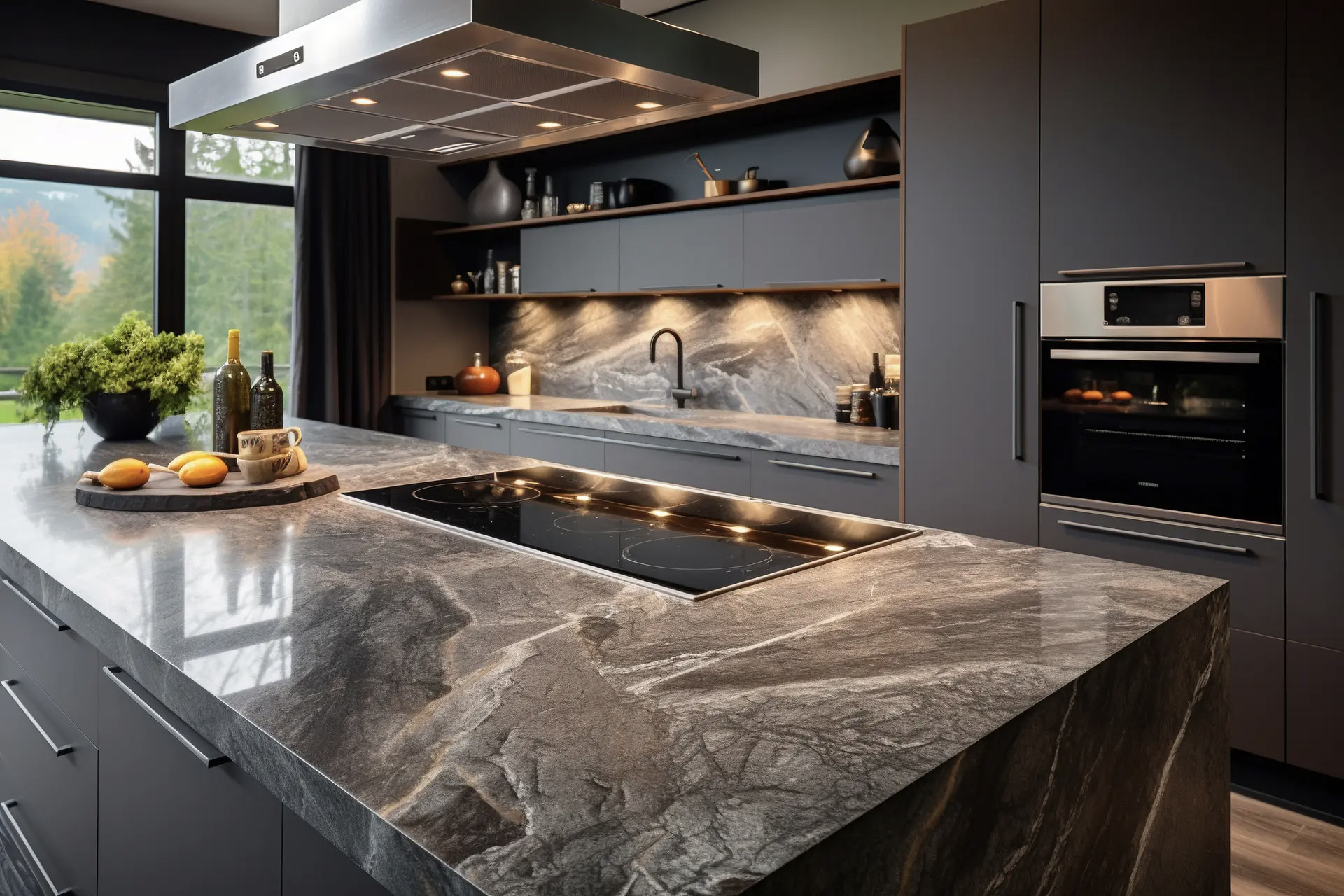
Source: Les Beaux Lieux Design
Countertops are an essential kitchen feature, especially if you need a user-friendly worktop for meal prepping. As such, don’t compromise on material quality when selecting a counter surface material.
Material | Characteristics |
Marble | A costly, but high-end, resilient, and waterproof material. |
Wood | A premium material, with both affordable and costly options depending on the grade quality. |
Slate | A heavy material that makes for a stunning aesthetic yet needs to sit on a very solid base. |
Corian | Easy to shape; ideal for creating unique shapes. |
Granite | Makes for a countertop with a resilient surface, and comes in an array of colours and patterns. |
Quartz | An ultra-resistant material, with a rather luxurious aesthetic look. |
Concrete | A raw material, sometimes difficult to maintain, but allows for creative designs given its texture, hues, and the decorative elements that can be embedded into it. |
Ceramic | A timeless classic that appeals to all tastes and budgets! |
Metal (stainless steel, copper, or zinc) | Delivers a look that’s synonymous with diners or restaurant kitchens. |
Laminate | A product that mirrors the look of expensive, high-end materials. |
Check out these articles to learn more about kitchen counters:
Backsplashes
Source: Cuisines Rive-Sud
Ceramic
If the kitchen in question already has a backsplash, chances are, it’s designed with ceramic tiles. As of late, we’ve seen a lot of subway-style tiles, meaning staggered white rectangular tiles, mirroring that of New York subway stations.
However, it’s far from the only ceramic tile option. Head to ceramic tile shops to uncover the slew of models available, depicting an array of colours, textures, and even shapes. With tiles, you can transform a dull kitchen into a colourful, modern, creative, daring, or classic space, based on your aesthetic preferences.
Peel-and-Stick Tiles
This second option has been gaining traction in recent years on account of its ease of installation and overall affordability. Peel and stick tiles allow buyers to choose from a wide array of surface finishes while sidestepping the costs of original materials, be they brick, tile, or stone.
Brick (Real or Faux)
Even if a peel-and-steel backsplash can somewhat replicate brick, you may want to use real brick or a faux brick veneer. If you opt for real brick, make sure it doesn’t interfere with your counter space and that your wall can uphold the additional load.
Metal
For a bolder, more daring backsplash, consider metal panels or tiles. This option is especially interesting if you’re looking to create a restaurant-inspired kitchen. A metal backsplash can also add a hint of luxury to a more classic-looking kitchen.
Cabinets
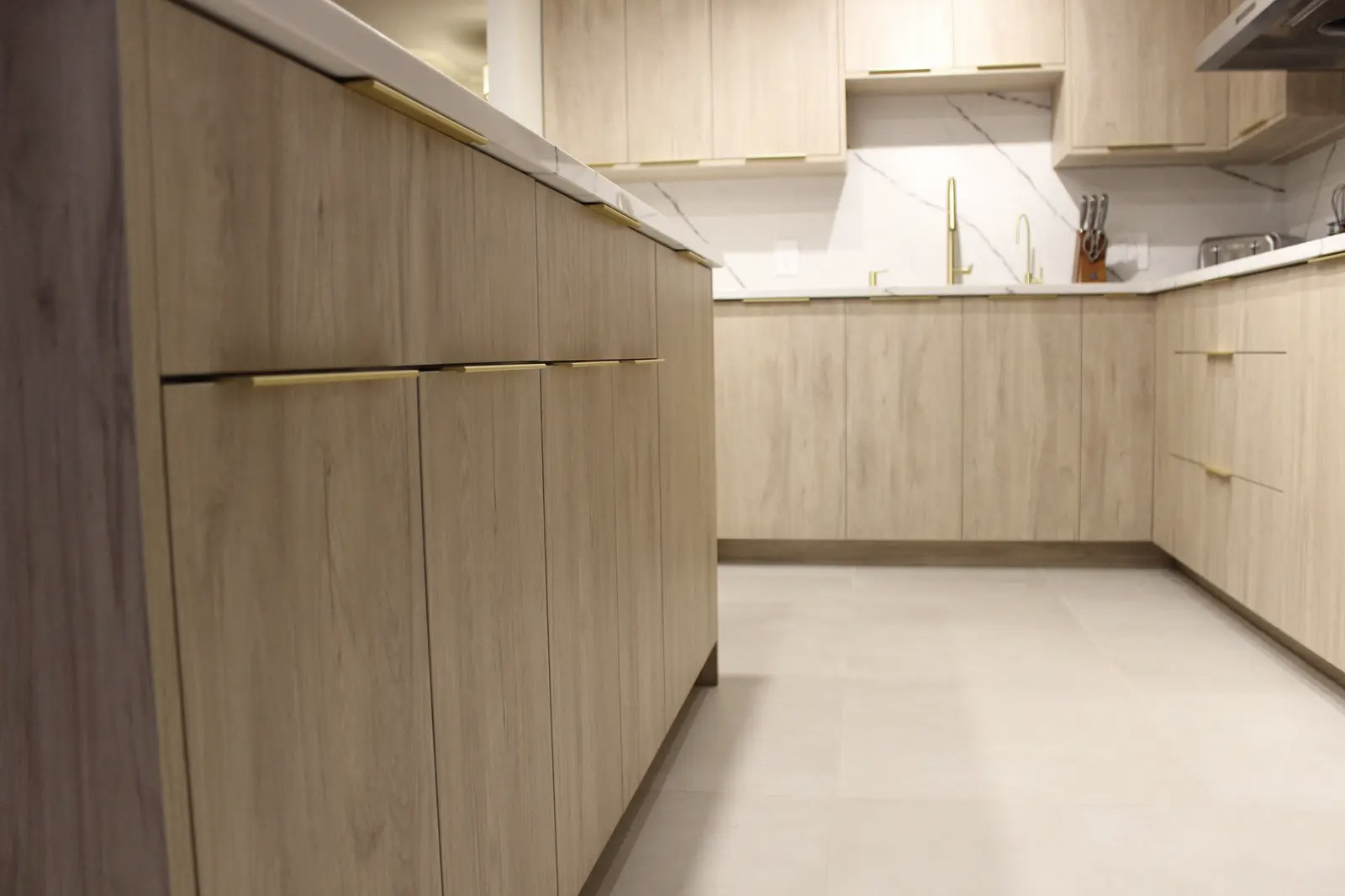
Source: Design Stipi & Co inc
Kitchen cabinets—cabinet doors especially—are exposed to their fair share of daily wear and tear. They’re slammed, stained, opened and closed repeatedly, and so on; these actions are repeated several times a day. If the material lacks resilience, signs of wear will appear quickly. Here are the most common kitchen cabinet and door materials:
Material | Characteristics |
Wood | A timeless material, suited to both modern and traditional aesthetics. With solid, high-quality wood, chances are, you can probably keep your cabinets for decades onward. To refresh wooden cabinets, consider resurfacing instead of replacing the cabinetry entirely. |
Medium-density fibreboard (MDF) | Typically an affordable and accessible option, and it can be covered with a decorative film. Some MDF cabinets mirror the look of hardwood while others feature a single, solid colour. |
Melamine | Melamine is making a strong comeback, with a slew of trendy designs. It always makes for a cost-effective and versatile choice. |
For more information, check out these articles:
Hardware (Handles, Hinges, and Pulls)
Source: Cuisines Rive-Sud
This may seem like a trivial detail, but accessories can create a lasting impression on a kitchen’s overall look.
While kitchen cabinetry's hardware isn’t necessarily an eye-catcher witnessed on a daily, choosing good quality parts is paramount. If you skimp on hardware, you’re likely going to have to replace it in a few years.
Cabinet Handles and Drawer Pulls
When it comes to cabinet handles and drawer pulls, buying quality products is prescribed, but don’t overlook aesthetics in the process. Are your handles and/or pulls meant to be very ornate or minimalist? Are you looking to have a contrasting colour scheme, offsetting your cabinets?
Plastic or metal handles and pulls are commonly sold in-store. If you can, test the ergonomics of the selected handles since you’ll have to use them every day. While pretty, a handle or pull can have an uncomfortable grip, which you may regret over time.
Would you rather have handleless kitchen cabinets?
In a modern kitchen, handleless cabinet doors are rather common. There’s either a gap for your fingers to grip and pull the door toward you or a hollowed-out groove at the top or bottom of the cabinet for opening the door or drawer.
While appealing, it doesn’t make for an ergonomic choice, especially for those with weakened hand muscles.
Storage
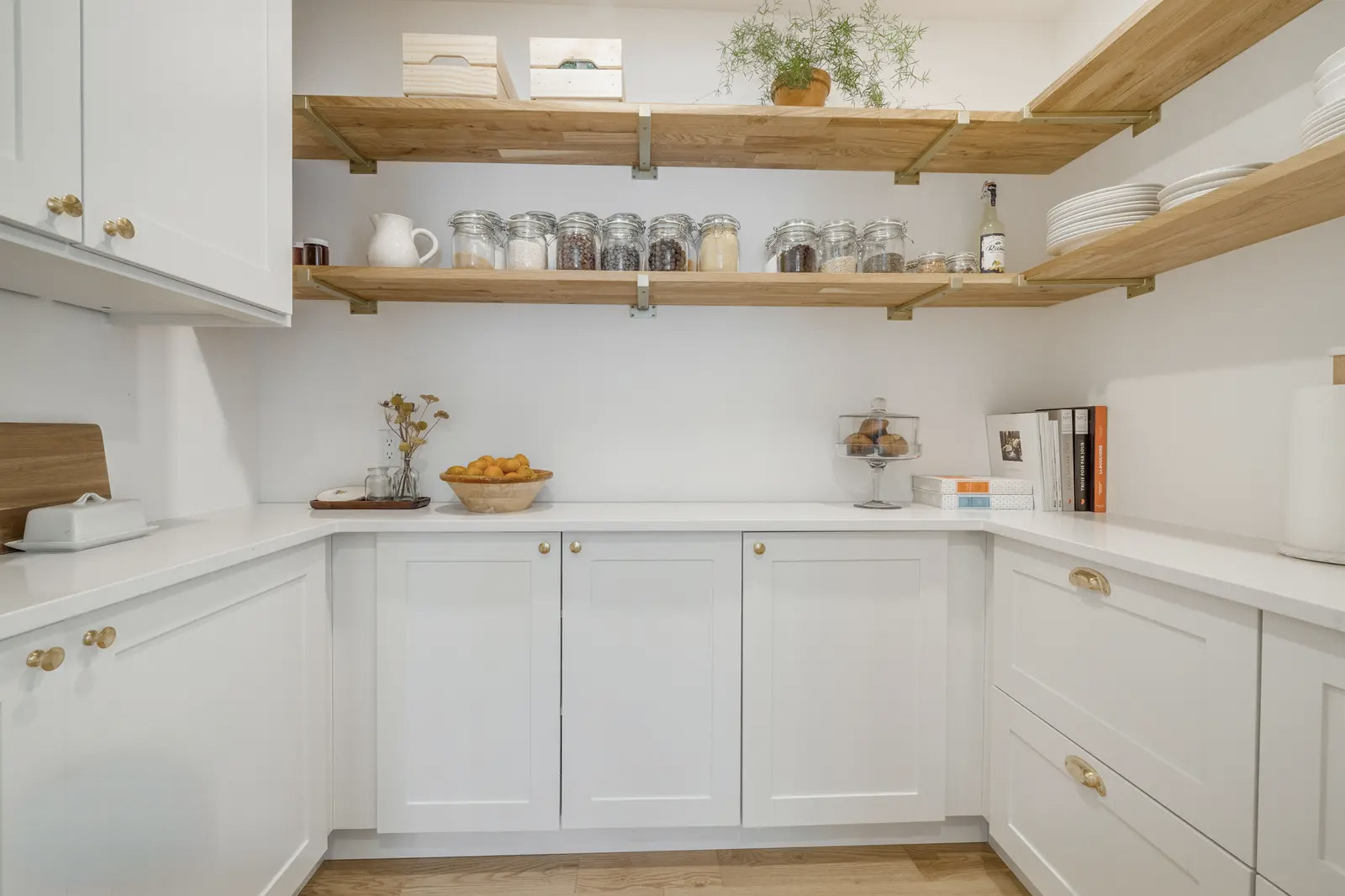
Source: La SHOP cuisine
You must take some time to consider your kitchen storage. Unsurprisingly, your kitchen’s functionality hinges on efficiency and available storage. Here’s a look at the different kitchen storage solutions:
Cupboards
Avoid out-of-reach storage. To do so, multi-level lazy Susans, especially in lower cupboards, are great. You can also opt for pull-out shelves or space dividers installed in the top or bottom cupboards to ensure easy access to stored items.
As for the storage space that sits beneath the sink, consider including storage baskets and a pull-out system for the trash and recycling bins. Lastly, use the back of the cupboards to install a variety of cupboard-adapted accessories, such as small shelves, spice racks, or plastic bag dispensers.
Drawers
Kitchen drawers can quickly turn into a cluttered mess. Finding kitchenware in a drawer full of miscellaneous items can be both frustrating and risky if sharp objects, such as knives or peelers, have found a home in there too.
Hence, we recommend getting storage trays that fit inside the drawers, ensuring all cookware items are organized and easy to find. For big drawers, get a few baskets or dividers to split the surface, having an item-dedicated space within.
Shelving
One of the primary aspects to consider when it comes to open shelving in a kitchen is whether it will be used to its fullest potential.
Will they be more decorative, showcasing aesthetic trinkets, or will they be used to stack your everyday dishware? Either way, make sure to create something that’s visually appealing and fits with the rest of the room.
Wall Coverings
Source: 3M construction 3M excavation
Paint
One of the most affordable and versatile products available to transform the walls of your kitchen is paint. Pick a colour you like, matching it to the cabinetry and surrounding features to create a brighter, bolder, or classic space, based on your aesthetic preferences. Note, however, that it’s best to use kitchen-specific paints given the exposure to moisture, heat, and dirt, compared to that of other areas around the house.
Wallpaper
Wallpaper has made quite the comeback in recent years with easy, peel-and-stick quality products, featuring stunning patterns. For kitchens, make sure to choose a moisture-proof wallpaper with an easy-to-clean surface.
Decorative Panels
Here’s another option if you’d rather cover your walls with added texture, trimming, or 3D sections—Yup! You read that right! Decorative panels come in an impressive array of materials, such as wood, plastic, faux brick, faux stone, MDF, and so on. Material quality and price points vary from one to the other, so don’t hesitate to shop around to find the product that suits you best!
Wood
You can also opt for separate wooden boards (not panelling, but shiplap) to create a unique wall covering. However, use material-appropriate products to coat and protect the wood, streamlining your maintenance routine down the line.
Brick
Brick is found in both traditionally classic homes and contemporary decor. If you’re looking to have exposed brick walls in your kitchen, plan this project down to the smallest detail, especially if your walls aren’t yet covered in bricks.
For a cheaper and faster option, opt for decorative brick panelling. However, for real brick cladding, consider whether your home is structurally sound enough to uphold the additional load.
Stone
Like brick, stone is a rich material, one that adds a hint of elegance to a kitchen. If you plan on using real stone, set aside a substantial chunk of your budget. Naturally, you can also find veneer options that mimic the genuine look of stone.
Concrete
You can add thin coats of concrete to your walls, making for an industrial-inspired look. You can also find concrete tiles or products mimicking the genuine look of concrete. Lastly, you can create a faux finish with paint or specially designed products sold at local hardware stores.
Ceramic Tiles
See the section dedicated to backsplashes.
Flooring
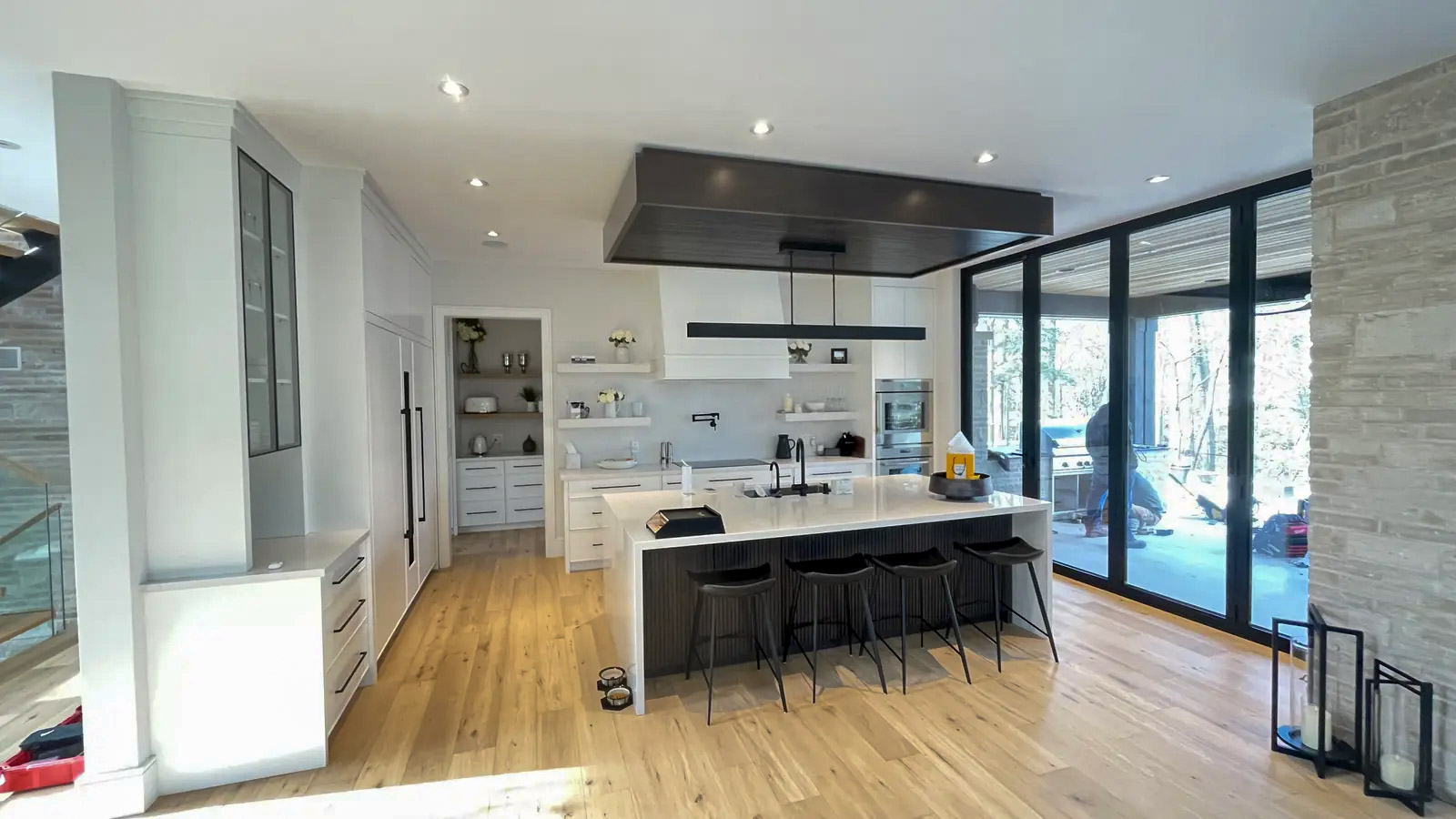
Source: Wafo tchinda Serge Alain
Kitchen floors must be exceptionally durable given that they’re exposed to water, food, heat, and a slew of other elements that complicate maintenance. Hence, choosing flooring that suits your aesthetic preferences and simplifies your cleaning routine is paramount. Here’s a list of kitchen flooring to prioritize:
Material | Characteristics |
Ceramic tiles | Similar to countertops, ceramic floor tiles are an excellent choice for kitchen flooring. To simplify your maintenance routine, choose medium- to large-sized tiles with a smooth and even surface. |
Stone | Stone flooring typically features among the most expensive materials, but has great value for money on account of its resilient surface and timeless appeal. |
Wood | If you opt for wooden kitchen floors, make sure the surface is sealed and protected to prevent water damage (warping). From this perspective, hardwood outperforms softwood. |
Vinyl | Vinyl is affordable and versatile, and a cost-effective alternative to wood and ceramic tiles. It mimics an array of different, high-end materials. |
Linoleum | This once trendy material is back on its feet thanks to a new, sustainable and eco-friendly manufacturing process. |
Concrete | Looking for something with modern appeal? Concrete is no longer type-cast as garage flooring! This versatile material makes for eye-catching kitchen flooring. |
Plumbing and Electricals
Source: Generational Homes Inc.
We combined electrical and plumbing renovations into one category. Even though electricity and water don’t mix well, they often go hand-in-hand during a renovation project. If you have to, for example, upgrade all the plumbing, take advantage of the fact that the walls are open to then update the kitchen’s electrical installations. Let’s start by detailing the primary kitchen plumbing components.
Plumbing
First, you’re likely to experience something completely different if you’re working with outdated kitchen plumbing. As such, everything should be replaced. On the other hand, if you’re building a kitchen in a space that didn’t host a kitchen prior, you’ll have to start from scratch.
Before considering what type of faucet you’d like or sink that would best fit your decor, consult a plumbing expert who can help guide you based on your needs.
What plumbing features are a part of a kitchen setup?
Pipes
Faucet
Sink
Dishwasher
Accessories (garbage disposal, water filter)
Other plumbing systems can be found throughout the house, including the water heater, air conditioner, heating system, and more.
Are you working with an unlicensed, weekend plumber? Note that in doing so, the little money you save is likely to go toward paying off your fine. Under no circumstances should plumbing work be entrusted to anyone but industry experts.
As a homeowner, you can carry out minor DIY projects, such as changing a sink or faucet, but steer clear of piping, it’s strictly prohibited.
Here are some helpful plumbing-related articles, in case you've reached that stage of your kitchen renovation:
Electricals
In your new kitchen, you’re going to want decent lighting, allowing you to carry out different kitchen-focused activities, such as:
Meal prep
Help the kids with their homework
Spend time with friends
Any other function your kitchen serves (office, living room, dining room)
Designing a lighting scheme is an art in and of itself, one that’s much harder to put together than it seems. As such, we strongly suggest hiring experts, either interior designers, decorators, or specialized contractors. These professionals can help you put together a lighting scheme that will make your kitchen beyond cozy, welcoming, and above all, user-friendly!
For an initial understanding of the subject matter, take a look at these two articles:
Electrical Wiring
Beyond lighting, one has to consider the power supply needed for kitchen appliances. Appliances are considered some of the most energy-intensive devices in a home, and as such, it’s beyond important that the electrical system is up-to-date and compliant, meeting their power-related needs.
In a lot of old houses, electrical panels aren’t up to standard and struggle to supply enough power to allow appliances to function optimally. To prevent hazards and disruptive factors (most especially power outages), take advantage of your kitchen remodel to upgrade some (or all) electrical systems that power your kitchen.
How much should you budget for a kitchen renovation?
Source: Cuisines Rive-Sud
A realistic kitchen renovation budget should reflect the room’s size, project scope, labour costs, materials, and whether the existing layout will change.
As outlined in our article "Kitchen Renovation Cost in Canada in 2026: Budget, Prices and Tips," a budget-friendly renovation typically starts at $15,000 to $20,000. A mid-range renovation generally costs $35,000 to $45,000, while a high-end project often exceeds $70,000.
These figures are planning estimates. Final costs vary by region, contractor, materials, permits, and any issues uncovered during demolition.
Build a Realistic Budget
Divide your total budget into clear categories so you can compare quotes and adjust priorities more easily:
Cabinetry: Cabinets, hardware, trim, and installation
Labour: Demolition, carpentry, plumbing, electrical work, flooring, tiling, and painting
Surfaces: Countertops, backsplash, and flooring
Appliances and fixtures: Appliances, sink, faucet, lighting, and ventilation
Permits and inspections: Municipal fees and required documents
Contingency fund: Money reserved for unexpected work
Cabinetry and labour often account for the largest share of the total cost.
Kitchen Renovation Budget Comparison
Renovation Level | Typical Budget | What It Typically Covers |
Budget-friendly | $15,000 to $20,000 | Cosmetic updates, stock cabinetry or refacing, standard countertops, paint, and limited trade work |
Mid-range | $35,000 to $45,000 | New cabinetry, countertops, flooring, backsplash, appliances, and professional installation |
High-end | $70,000+ | Custom cabinetry, premium finishes, layout changes, structural work, and luxury appliances |
Keeping the existing layout is one of the best ways to control costs. Moving plumbing, electrical wiring, gas lines, or walls can significantly increase the budget.
Set Aside a Contingency Fund
Reserve 10% to 15% of the project budget for unexpected expenses. For a $40,000 renovation, that means setting aside about $4,000 to $6,000.
This reserve can help cover hidden water damage, outdated wiring, plumbing repairs, uneven flooring, or structural issues.
Hidden Kitchen Renovation Costs
Homeowners often overlook:
Permit and inspection fees
Demolition and waste disposal
Delivery and storage charges
Temporary kitchen or meal costs
Repairs discovered after demolition
Change orders
Final cleaning
Applicable taxes
Review each contractor’s quote carefully to confirm what is included.
How to Keep Costs Under Control
Track every invoice, purchase, and change order against the original budget. Compare itemized quotes rather than focusing only on the final total, and finalize material selections before construction begins.
To reduce overruns:
Keep the existing layout when practical
Avoid using contingency funds for optional upgrades
Confirm all changes in writing
Postpone non-essential features if costs increase
Check that competing quotes include the same scope of work
Hiring the Right Professionals and Managing the Project Well
Source: MTL Contractors
Hiring the right people is one of the most important steps in a kitchen renovation. A good contractor, designer, or installer can keep the work organized, reduce mistakes, and help the project move forward smoothly. Before you hire anyone, look for experience with kitchen renovations specifically, check references, and make sure the professional is properly licensed and insured where required. It also helps to ask how they handle scheduling, communication, and unexpected issues so you know what to expect once the work begins.
Once your team is in place, clear project management becomes just as important as the hire itself. Get the scope of work in writing, confirm the timeline, and make sure everyone understands who is responsible for each part of the renovation. A well-run project should include regular updates, approval before major changes, and a simple way to track decisions and progress. This helps prevent confusion, delays, and costly rework later on.
Planning ahead also makes a big difference. Book professionals early, especially if your renovation needs several trades at once. Make sure materials, measurements, and installation dates are aligned before construction starts. If possible, schedule the work with enough flexibility to handle delays without disrupting the whole project. Careful coordination between contractors, designers, and installers can make the renovation feel much more manageable and far less stressful.
Renovation Tips That Prevent Costly Mistakes
Source: Construction Rubix Inc.
A successful kitchen renovation depends on the decisions you make before and during the work. Focus on practical choices that reduce avoidable problems, such as protecting nearby rooms from dust, confirming measurements before ordering anything, and checking that all materials and fixtures will fit the space and work together. Small planning errors can create delays, damage, and extra labour, so double-checking details early is one of the best ways to keep the project on track.
Another important best practice is to verify that the renovation is being completed in the correct order. Demolition, rough-in work, installation, and finishing steps should happen in sequence to avoid rework and prevent damage to completed areas. It also helps to keep communication clear and documented, especially when something changes during the project. If an issue comes up, address it immediately so it does not turn into a larger repair later.
To maximize the value of the renovation, prioritize changes that improve everyday use and long-term durability. A kitchen that is easier to clean, easier to move around in, and built with materials that hold up well over time will deliver more lasting value than choices made purely for appearance. When in doubt, choose practical improvements that support function, reduce maintenance, and make the space more comfortable to use.
FAQ
What are some popular luxury additions for a kitchen renovation?
Popular luxury additions include smart appliances, custom cabinets, soft-close hinges, touch-activated faucets, dimmer switches, walk-in pantries, and high-end building materials. These upgrades can make the kitchen feel more convenient, polished, and personalized.
How do luxury upgrades affect a kitchen renovation?
Luxury upgrades can improve comfort, usability, and the overall look of the kitchen. They often create a more refined finish and can make the space feel more tailored to daily routines, entertaining, and long-term enjoyment.
What should you decide before picking kitchen finishes?
You should first confirm how you use the kitchen every day. That makes it easier to choose finishes, storage, and materials that suit your routine.
How can you keep a kitchen renovation budget under control?
Keep the existing layout if possible, compare itemized quotes, and leave room for unexpected costs. Tracking every expense also helps prevent overspending.
Why is project order important in a kitchen renovation?
Doing the work in the right order helps avoid rework, delays, and damage. Demolition, rough-ins, installation, and finishing should all happen in sequence.
What are the biggest hidden kitchen renovation costs?
Common hidden costs include permits, demolition, waste removal, delivery, storage, and repairs discovered after demolition. These can affect the final total more than many homeowners expect.
When should you hire kitchen renovation professionals?
It’s best to hire professionals early, especially if your project involves plumbing, electrical work, or several trades. Early booking also helps keep the timeline realistic.
What makes a kitchen renovation more durable?
Choose quality materials, practical storage, and finishes that are easy to clean and maintain. Durability matters because it helps the kitchen stay functional longer.
Looking for something else?
Related articles
The latest industry news, interviews, technologies, and resources.
Editorial Team
•28 Apr 2026
Are you renovating your kitchen and need a new countertop? Should that be the case, you probably already have a few questions in mind about it.

Editorial Team
•02 Apr 2026
Are you planning on refurbishing, redecorating, or renovating your kitchen? You can always make this key area, also known as the heart of your home, more user-friendly and ergonomic while still considering your budget and personal preferences. Have no fear, unless said area is stuck in time, there’s no need to demolish everything and start from scratch for a little aesthetic revamp.

Editorial Team
•08 Nov 2023
This type of paint is often still linked to large-scale projects. However, nowadays, painting the whole inside of a house is nothing compared to what it was back in the day.

Editorial Team
•29 Jan 2026
Thinking of changing the floors in your home in the near future? Without a doubt, you’re already thinking about budgets and costs to carry out such a renovation project.

Cynthia Pigeon
•28 May 2026
Maintaining, expanding or modernizing a property on the island of Montréal requires careful planning. Whether you are restoring the foundation of a century-old duplex after a harsh winter or reconfiguring the interior layout of a condo, projects must comply with the municipality’s regulatory requirements. Due to the effects of Quebec’s climate, including freeze-thaw cycles, summer humidity and heavy snow loads, structural components and building envelopes often require frequent and durable interventions.